

What Is CLT?
CLT is a method that bonds timber planks in perpendicular layers to harness wood’s tensile strength in two dimensions and create panels that are sufficiently rigid to serve as both walls and floors. Advances in bonding-agent technology have rendered panels waterproof and multiplied the durability and longevity of lamination exponentially.
Of course, all methods can be challenged, and concerns about depleting forests for building timber are valid but largely unwarranted. Forestry experts believe instead that increased demand for timber and profitability of plantations will be a catalyst for increased planting, better long-term planning, and better forest management.
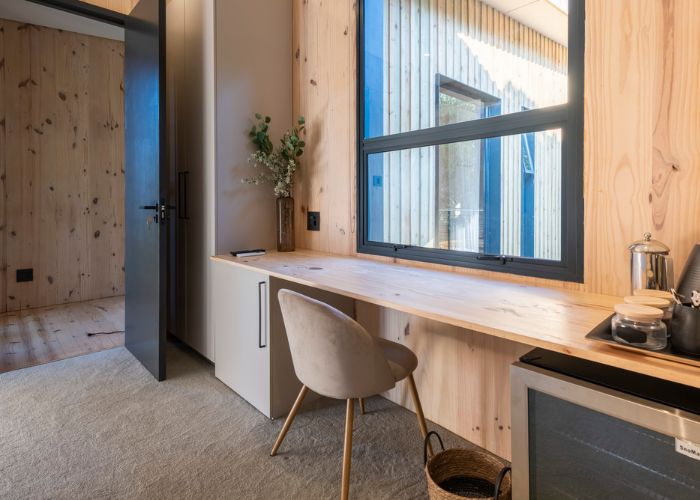
Cross-Laminated Timber, Explained
Cross-laminated timber (CLT) – a critical component of mass timber – is the responsible future of construction. There is growing pressure on the construction industry and property developers to change the materials used in buildings and pivot to sustainable alternatives that don’t compromise the environment and climate.
An enormous amount of energy is consumed in making the materials, transporting them, and using them on-site. Notwithstanding the toxicity of cement and its impact on the surrounding soil. The production of this material alone is estimated to account for 8% of global carbon dioxide (CO2) emissions. Due to the prolific use of cement, a global shortage of building sand has led to riverbeds, estuaries, beaches, and forests being stripped bare on a massive scale that threatens sensitive ecosystems.
In short, concrete construction is unsustainable at the scale it is currently being used.
The Future is Here
In 2022, the world’s tallest timber building was completed in Milwaukee, USA, topping out at 25 storeys. A hybrid building where only the parking garages and elevator shaft were constructed of concrete, it demanded a new approach to building codes – and changed what the industry believed was possible. CLT has gained unprecedented momentum worldwide due to the undeniable advantages of Mass Timber construction.
We believe this will be the beginning of a revolution in the building industry. There is an opportunity for construction to be a force for good, for disruption and change. It’s meant to be.